

Developing a simple but effective Investment plan.
Aug 23, 2024

Friends,
How many of us truly have an investment plan and strategy on how we deploy our resources? or we are just guided by the whims of time? If you are like me, read on.
Developing an investment strategy is a crucial endeavor that requires a deep understanding of one's financial goals and the inherent risks associated with investment decisions, it is essential to establish a clear investment purpose, whether it's building a family home, preparing for your child's education, or ensuring financial independence and soundness.
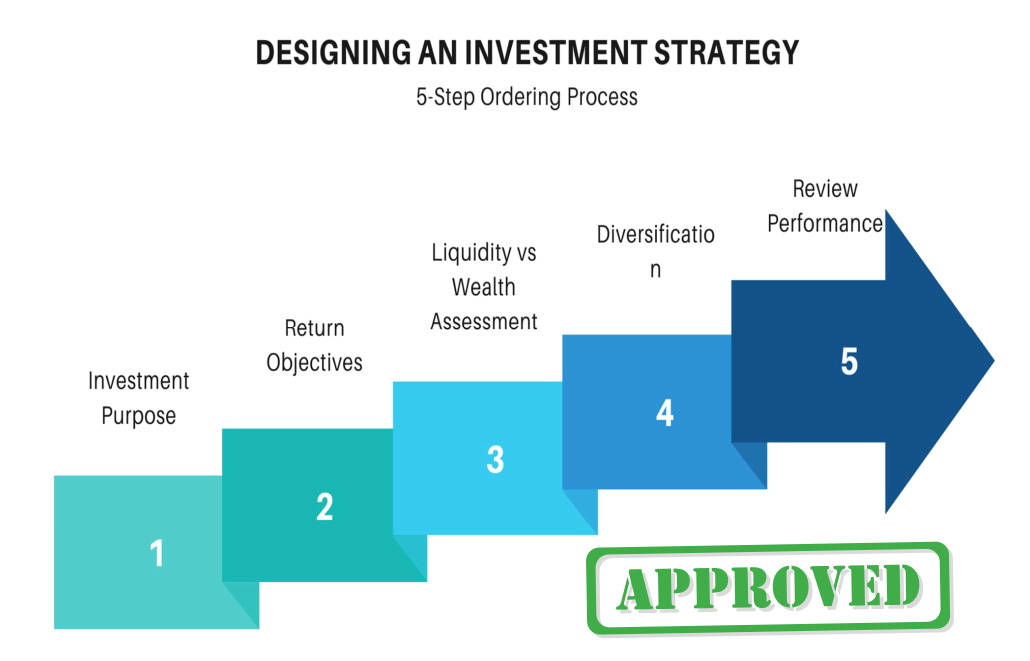
The first step in coming up with an investment strategy is to define your investment purpose. This purpose should guide your financial decisions and help you set clear, achievable goals.
Your Investment goals and purposes should be measurable and time bound to allow you monitor how far you are achieving them or how off you are.
- A plan to construct your family home in 10 years.
- Having a total sum assured at time of retirement in 20 years
- Setting up a child education fund with say 30 million in total in 10 years.
- Having a full secured medical emergency fund in 10 years with a minimum of 50 million.
Be very ambitious to yourself while at the same time very idealistic, in a way that makes you wake up daily to want to work towards your plan. Establishing it in a concise and documented manner gives you leeway to always go back and see if you are achieving it or not and this helps you measure your progress on the same.
After setting up your investment goals and purpose, it's important to consider the return objectives of your investments. You must determine the minimum return that is acceptable for your financial goals. These will have to be different for each investment, but be willing to adjust them accordingly to help you monitor and get the best out of your investment plan. If an investment does not meet your return threshold, it may not be worth pursuing. For example, if you start a farming project and in the first two years it’s not meeting your investment goals, the critical question to ask, is it worth to keep going and burning money on the project or its time to count your losses and move on. Sometimes quitting or letting something go might be the winning strategy for you in the long run.
Liquidity is another critical factor to consider. You need to decide whether you want your investments to be easily convertible into cash or if you are comfortable with less liquid assets. This decision will depend on your need for immediate funds versus long-term growth and how best you allocate your resources. As we keep driving towards diversification, its highly encouraged to have a significant portion of your investments in illiquid long term assets and also some investments in liquid investments like Unit trusts that you can easily access your money on a go while at the same time earning a descent return.
Moreover, the concept of liquidity cannot be overstated. The ability to convert your investments into cash without significant loss of value is a safety net that cannot be ignored. Whether it's for an emergency fund or taking advantage of a sudden investment opportunity, liquidity ensures that you're not caught off guard when life throws you a curveball.
Diversification is a key principle in developing an investment strategy. It's important to spread your investments across different asset classes to reduce risk. This approach ensures that if one investment faces challenges, others in your portfolio can potentially offset the losses.
Like any other plan in life, or even at work, regularly reviewing your investment strategy is also critical. You must assess the performance of your investments and make adjustments as necessary. This process involves being honest with yourself about what's working and what's not, and being willing to shift resources to more profitable ventures.
Understanding the risks involved in investing is crucial. Each Investment has its own risk that should match its return. Don’t invest in something that you don’t understand the risk side of, even when you return promised or profits promised are that good. In business and investment, the higher the return/profit, there higher the risk. Take time to understand the risk of your investments and diversify to help you diversify that risk to different portfolios. some may be inclined to pursue high-risk investments with the potential for high returns, it's essential to assess whether these align with your overall financial plan and risk tolerance. It's about finding that sweet spot where the potential gains justify the risks involved.
It's a nice piece. Thank you. Would be nice if you could come up with templates with percentages invested say btn bonds, unit trusts and shares depending on age or investment goal time or liquidity flexibility